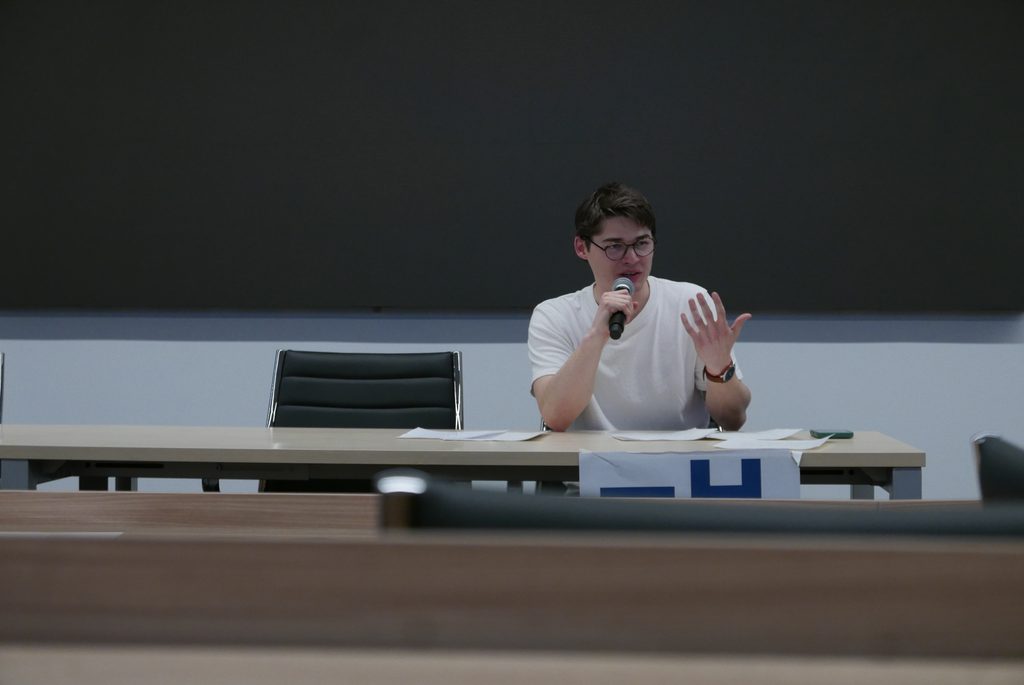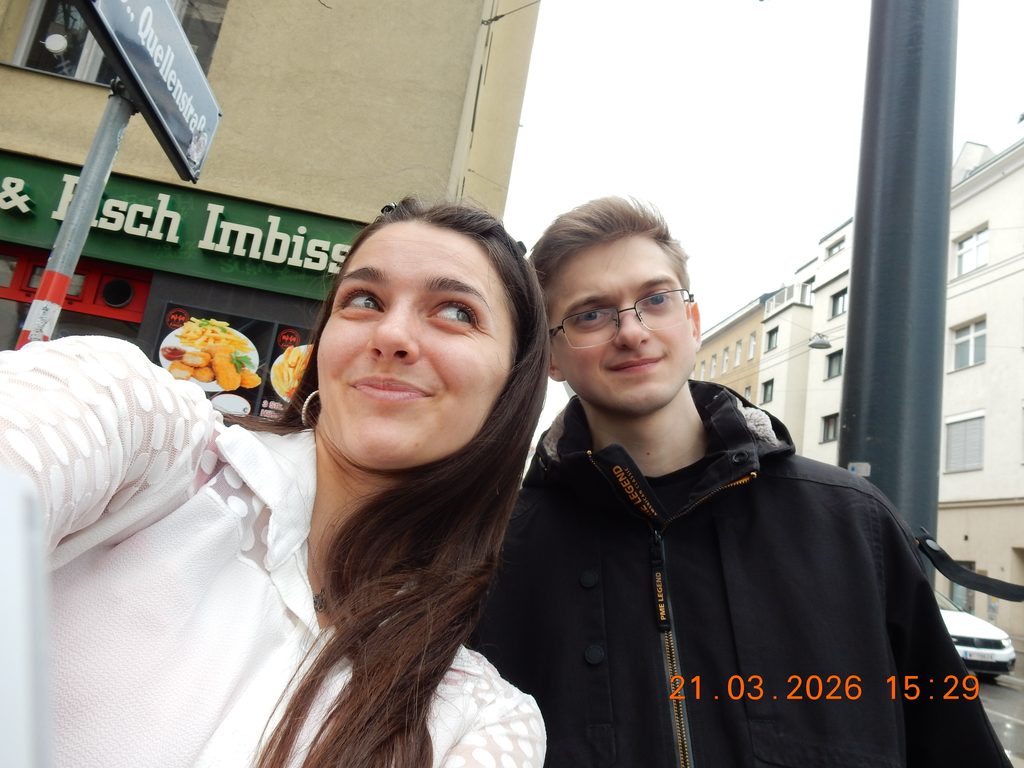

On the 21st March 2026, my teammate Lovis and I participated in the Vienna Novice Cup. This was our second fresher tournament, so any illusions of us being pretty good debaters and teaching these other kids a lesson have already been shattered by reality. Thus, we lowered our expectations to rock bottom, and looked forward to just having a fun time.
The first motion was on the increasing political involvement of celebrities. Opening Government convincingly argued that Sabrina Carpenter singing about Espresso and expressing sadness over the 2024 election results is saving our democracies. Coming after them as Closing Government, we basically had no cards left to play. The opposition took the stance that this involvement led to the extremes becoming enhanced and normalised in the public political sphere, which we countered by saying that any involvement in politics is better than none (hot take), earning us a second place.
The second motion was a first-person-motion, requiring us to argue that as a young middle class person, we would prefer having been born in the West rather than in China. This might seem like a biased motion, since in Europe, we learnt to value (western) democracies and the human rights convention and so on. However, the judges deciding who won the debate must take a neutral stance, and assume neither democracy nor authoritarianism to be the superior governing form. Thus, the main clash of the debate was whether participating in the project of collectively building prosperity in China is preferable to the individual-centric way of living in the West.
After learning that we won the second round, we remembered our last tournament experience, where we started shaking in our boots as soon as we knew that we might just make it to the final. This time, we kept our wits about us and played it cool, knowing that many teams out there have way more experience than we do.
The third and last motion before the break was on strategies of dealing with the fallout of climate change: is ecological mitigation (e.g., building higher dams to counter rising sea levels) preferable to ecological migration (e.g., relocating citizens into safer areas)? We had some spec-knowledge on this motion, so we did alright.
When the break was announced, we learnt that we scored 2nd out of 40 teams, which meant that we would progress to the gold final. Therein, we had to argue against a world where memory is permanent and infallible.
This is where things went south. We had some good concepts for our arguments, but we struggled to explain them well enough, and we couldn’t prove that the impacts we claimed would actually occur. The trophy rightfully went to a team from Slovenia/Budapest. After the final, we were once more reminded that it isn’t the victories you learn most from — it’s the defeats.
Before finishing, I’d like to emphasize that the tournament has been very well organised by the DK Wien (thanks especially to Sarah and Sebastian!). From the pizzas at lunch to the timetable, everything was carefully organised and executed, which I really appreciate. The motions were also very interesting, and everybody treated each other with great friendliness and respect. Thank you very much!
Motion: Topic of a debate
Opening / Closing Government: Two teams of four in the British Parliamentary Debate format, both arguing for the same case, where Closing Government has to provide novelty to the Opening Government case
Spec-knowledge: Specialised knowledge
Break: The decision which teams make it to the next round or final